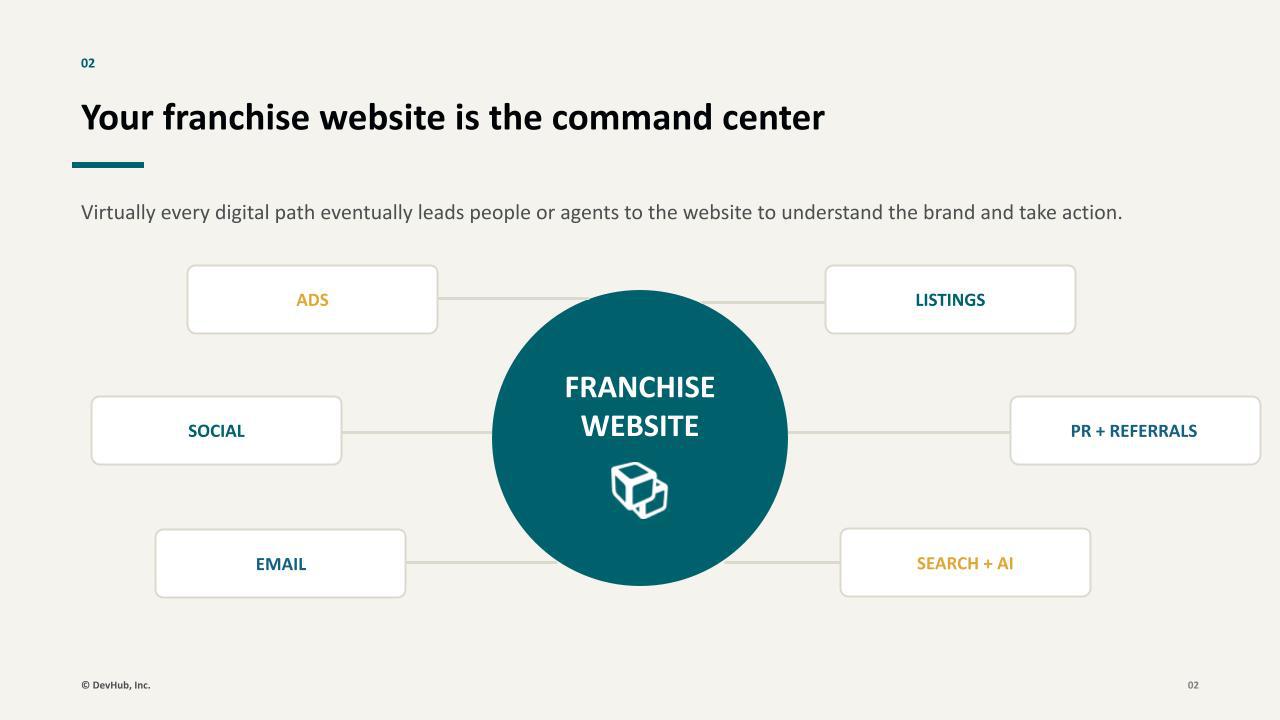
Every day, your team is busy with marketing activities. Social, email, paid, listings, campaigns, PR, and more.
And then all of it points back to one place that has barely changed in months: your website.
Many franchise brands still treat their website as a finished product. Something static that is essentially finished once it’s launched. It hardly changes until the next redesign.
The best-run franchise networks operate differently. They understand that the website isn’t just a marketing asset. It’s the command center.
Your Website Is the Command Center. Treat It Like One.
Your website connects paid media, search, listings, CRM, booking, lead routing, analytics, and the local customer experience. For a franchise brand, it also has to keep corporate and location-level information aligned across the network.
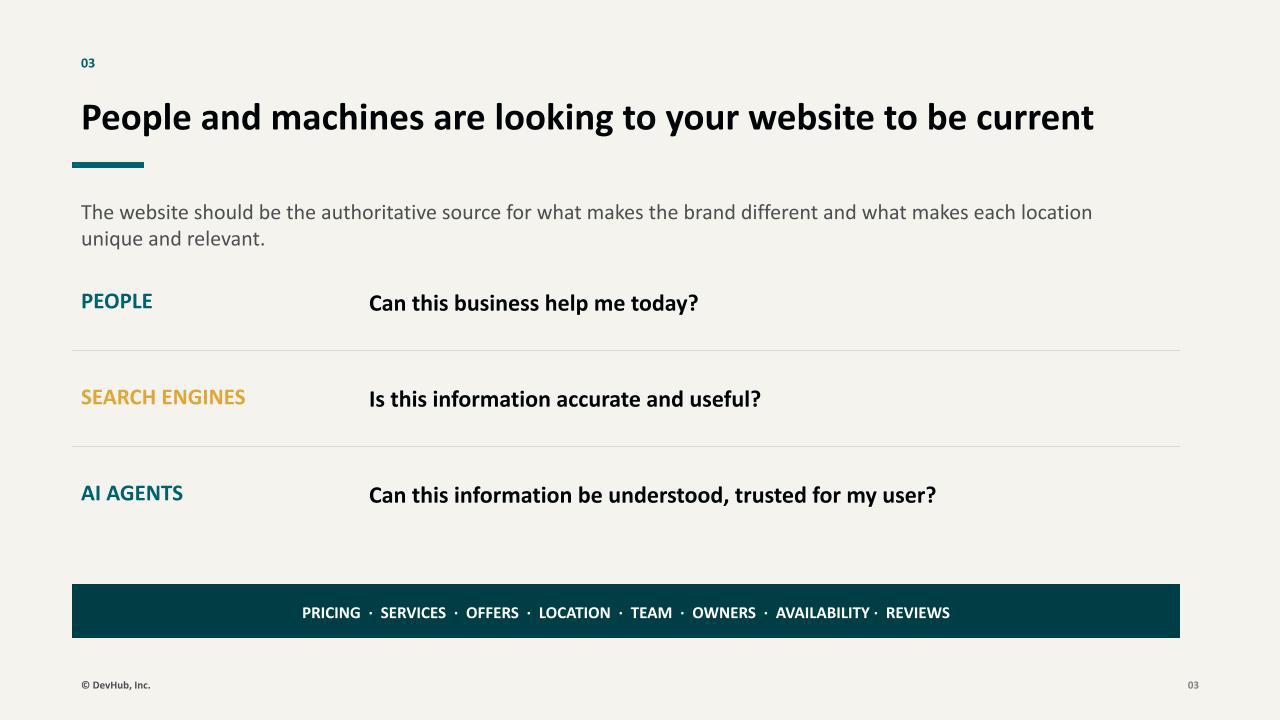
Customers are looking for practical answers: services, offers, hours, location details, availability, reviews, pricing when applicable, and a clear next step.
Search engines and AI systems are trying to understand much of that same information.
If the website is stale, incomplete, or difficult to navigate, the channels around it can only perform so well.
The “Launch and Leave” Trap
Here is what happens at a lot of franchise brands: the site launches, locations get added as the network grows, and then the site changes only when something forces it to. Eventually, another redesign starts and the cycle repeats.
That gap starts to show over time:
- Performance slips. New scripts, integrations, content, plugins, and one-off fixes can slowly weigh down a site that performed well at launch.
- Search visibility gets harder to defend. Location pages need current content, clean structure, schema, and technical foundations that keep pace with search.
- Franchisees notice. A local page that feels outdated, generic, or slow creates a very reasonable question: is the website keeping pace with what is actually happening in my market?
- Prospects notice too. Customers and franchise candidates both use the website to form an impression of the brand and the health of the system.
What started as a clean, modern site can turn into a “frankensite,” stitched together with bolt-ons, one-off fixes, and workarounds nobody fully understands anymore.
Or it sits with an agency or internal team that simply cannot keep pace with the volume of launches, updates, local requests, integrations, and campaign needs a growing network creates.
The original website may not have been the problem. The operating model around it is.
Complete, but Never Finished
Modern franchise networks do not treat the website as something that is finished at launch.
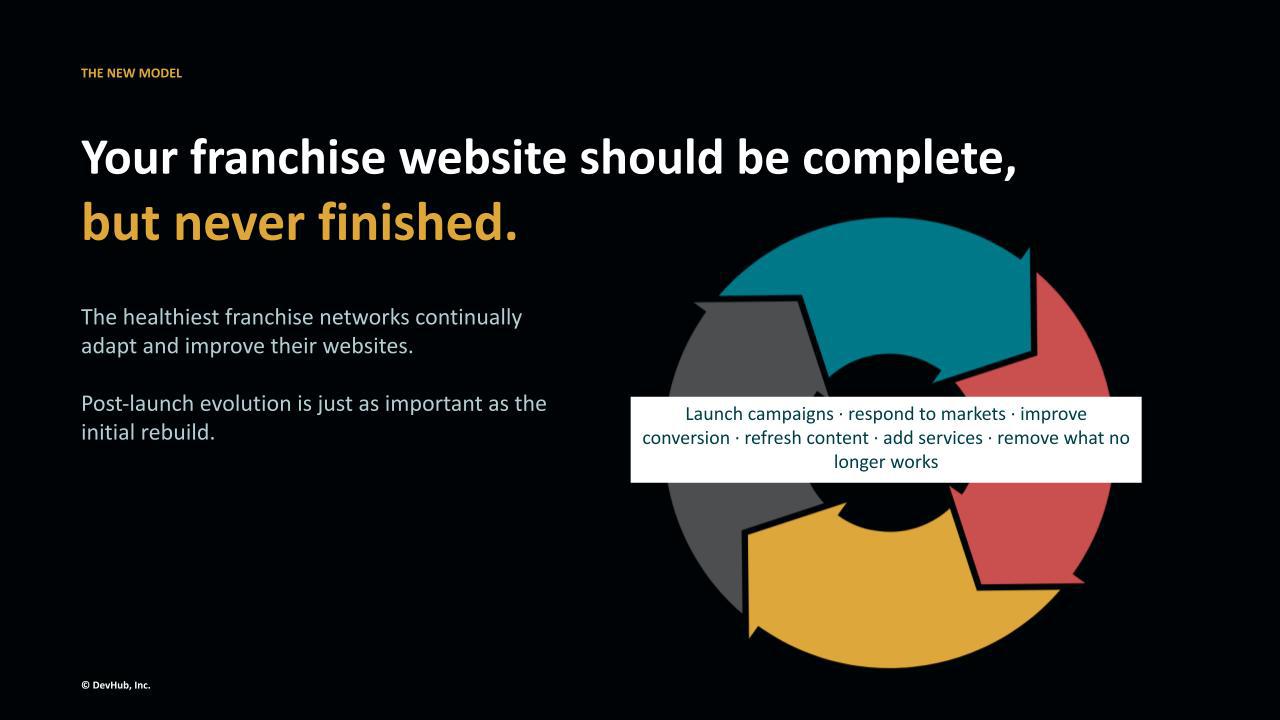
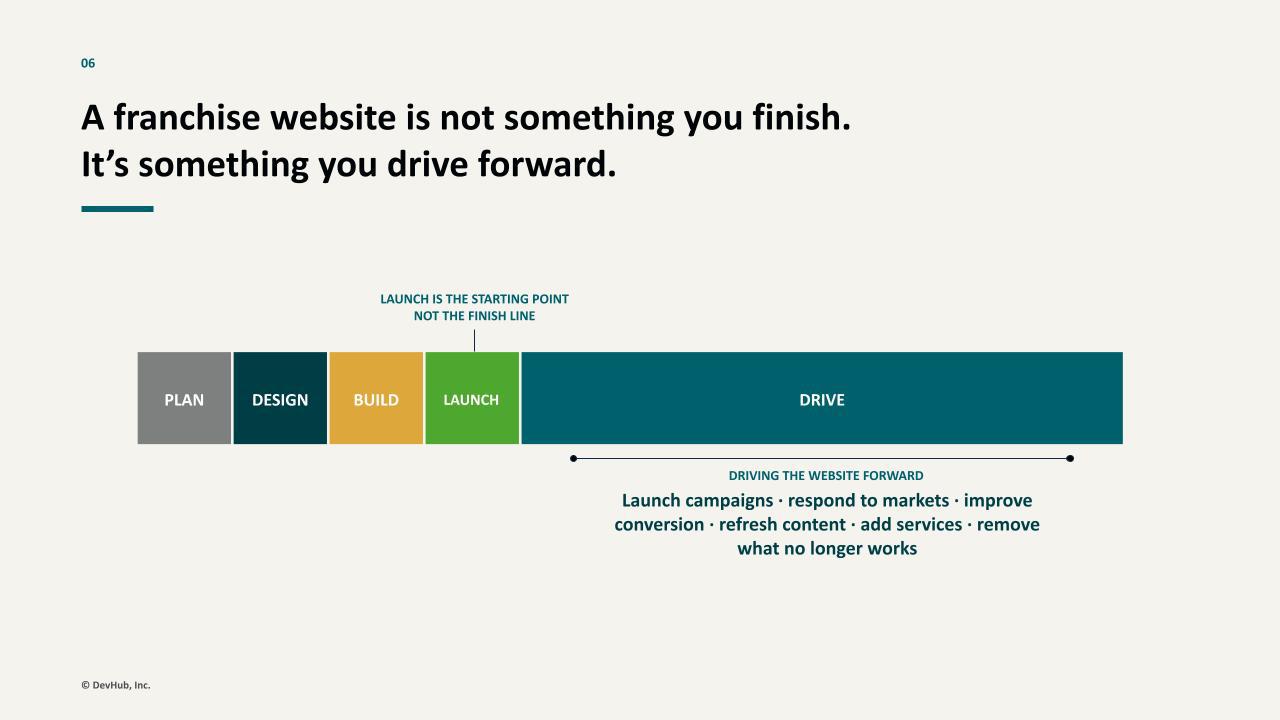
Launch is the starting point.
Plan, design, and build get you live. What happens after is where the real value gets created: launching campaigns, responding to what is working in-market, improving conversion, refreshing content, adding new services, opening locations, and removing what no longer earns its place.
Not everything needs to move at the same speed, though. A mature website operation runs on different cadences for different needs:
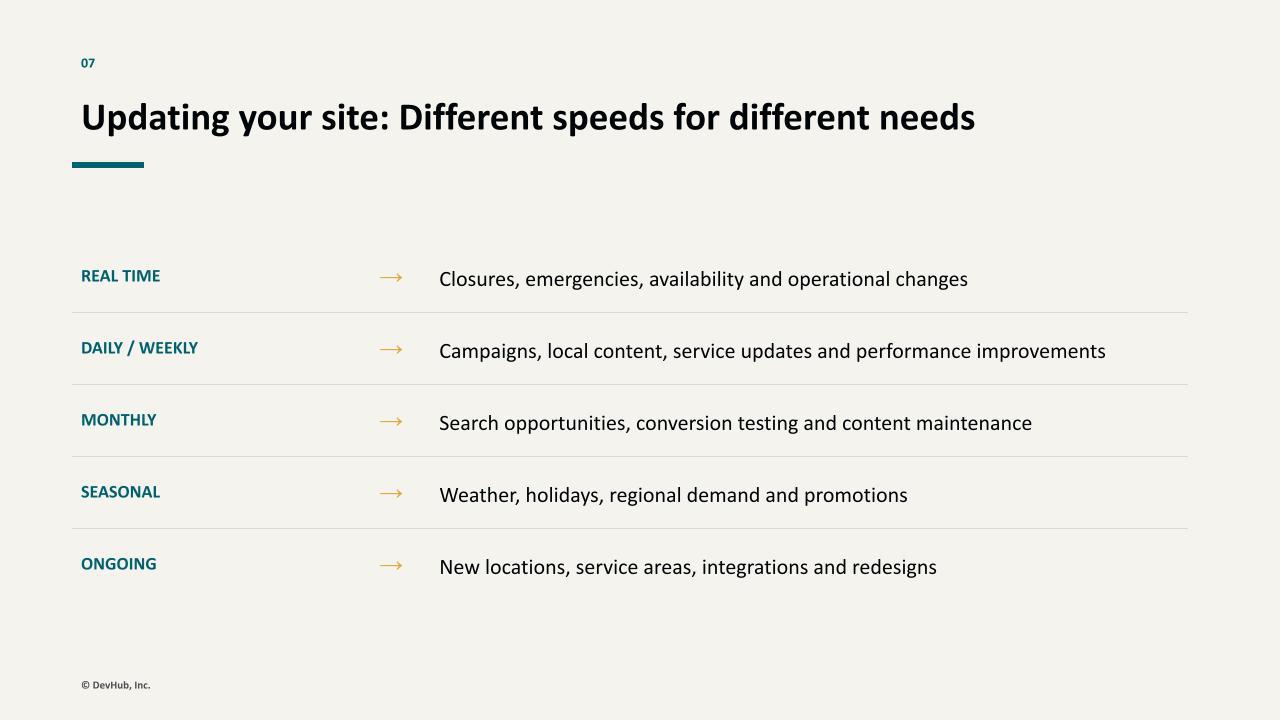
- Real time: closures, emergencies, availability, hours, operational changes
- Daily or weekly: campaigns, local content, service updates, performance fixes
- Monthly: search opportunities, conversion testing, content maintenance
- Seasonal: weather, holidays, regional demand, promotions
- Ongoing: new locations, service areas, integrations, redesigns
Treat all five like one bucket and you will either move too slowly on what is urgent or spend your entire week on things that could wait.
Keeping It Current Is a Team Sport
This is where franchise website management gets complicated.
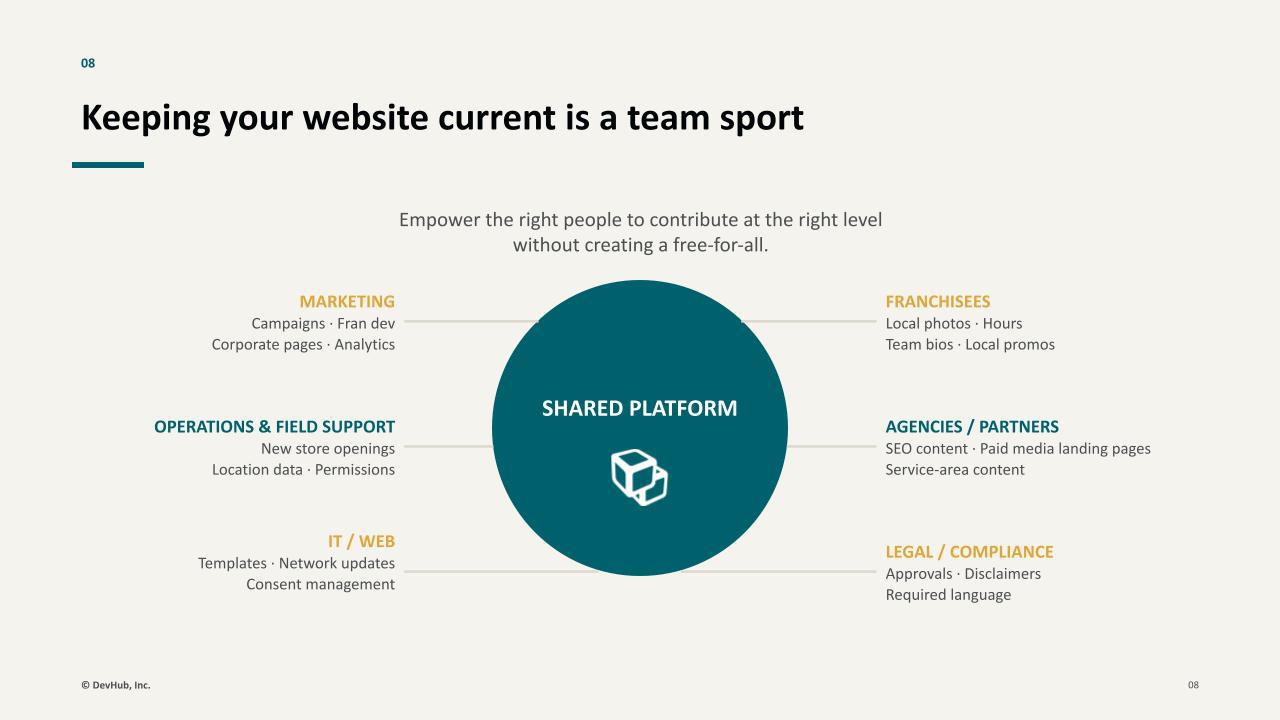
A franchise website is not maintained by one team. It is touched by many of them:
- Marketing: campaigns, franchise development, corporate pages, analytics
- Operations and field support: new location openings, location data, permissions
- IT and web teams: templates, integrations, network-wide updates, consent management
- Franchisees: local photos, hours, team bios, promotions, market-specific information
- Agencies and partners: SEO content, paid landing pages, service-area content
- Legal and compliance: approvals, disclaimers, required language
Give everyone unrestricted access and you create risk.
Lock everyone out and corporate becomes the bottleneck for every local request.
The better model gives each contributor the right level of control. Corporate protects the structure, brand, and systems. Local teams and franchisees can manage the information that genuinely needs to be local. Agencies can do the work they were hired to do without needing control of the entire website.
The goal is enough structure to protect the brand, with enough flexibility that every useful change does not require a ticket.
What “Operating Control” Actually Requires
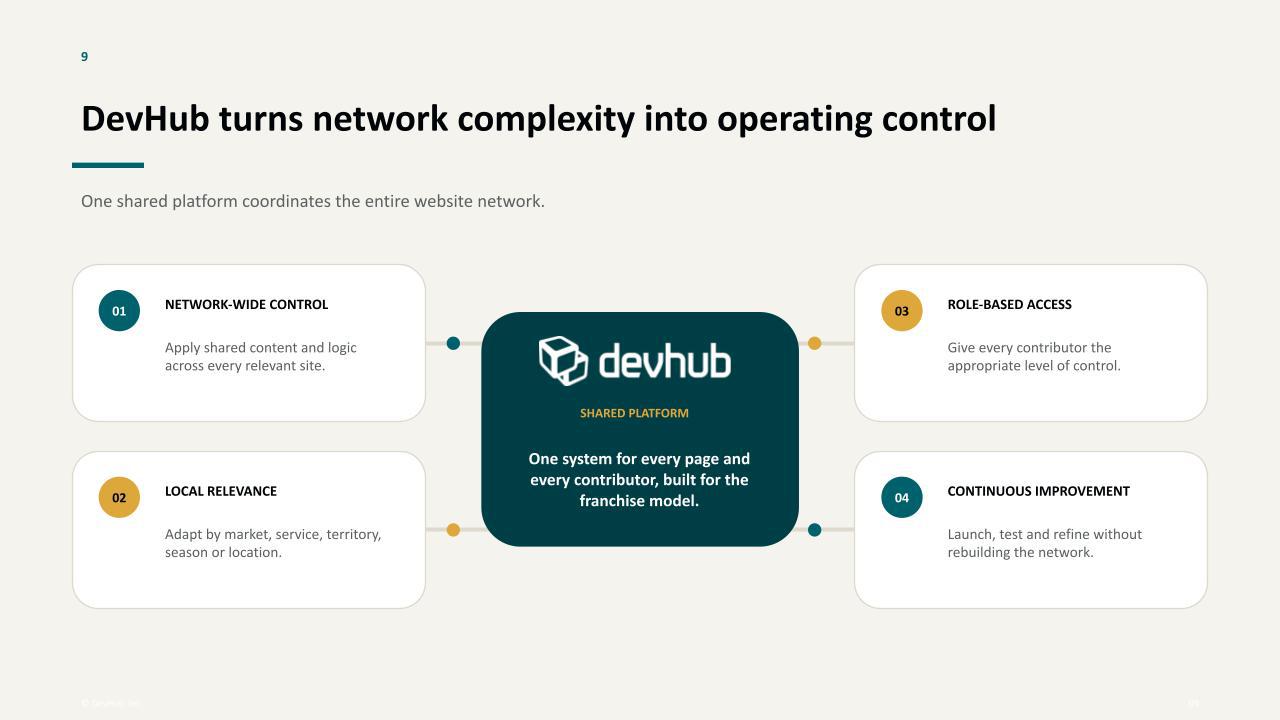
Turning all of that complexity into something manageable comes down to four capabilities working together.
- Network-wide control
Corporate needs the ability to push shared content, functionality, and logic across every relevant site at once. A new promotion, CTA, integration, disclaimer, or brand update should not require editing hundreds of pages individually.
- Local relevance
The system also has to adapt by market, service, territory, season, or location. A franchise network cannot win locally if every location is forced to look and read exactly the same.
- Role-based access
Corporate marketers, franchisees, agencies, operations teams, and other contributors should each have the appropriate level of control. Permissions should reflect the job someone needs to do, not force a choice between full access and no access.
- Continuous improvement
The site needs to support ongoing testing, refinement, and expansion without turning every meaningful change into another rebuild. What converts better? Which content deserves more prominence? What new service needs to launch in 40 markets? The platform should make those questions easier to act on.
When those four things work together, the website stops being something the organization works around.
It becomes something the organization can actually operate.
The Website Should Reflect the Business You Have Today
Your website should reflect the locations you have now, the services you offer now, the markets you serve now, and the story you are telling now.
That is the model DevHub was built around: one platform for corporate, local, and franchise development websites, with the controls to manage the network as a living system instead of another project that starts over every few years.